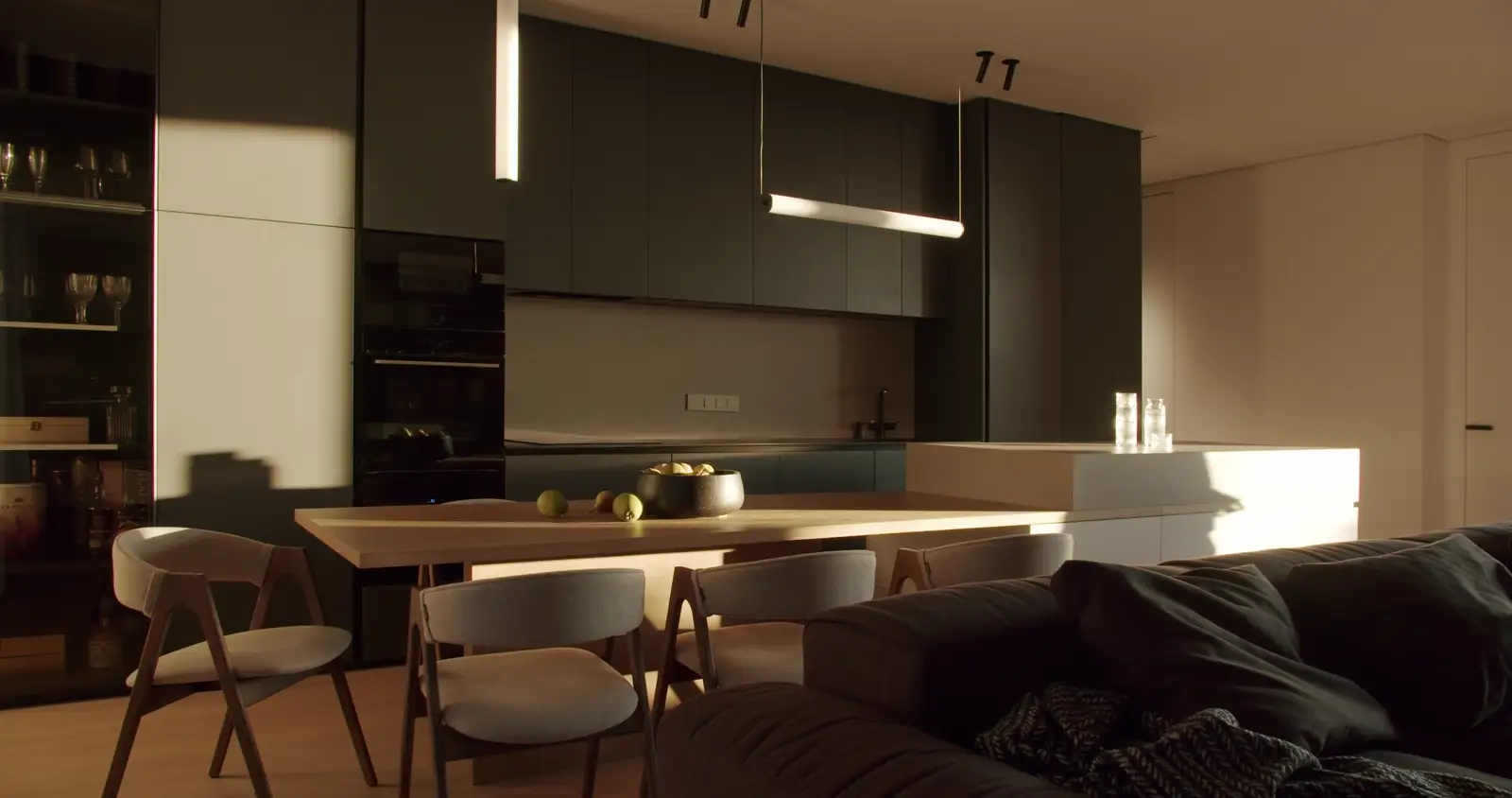
How Orlando homeowners can decide between refinishing and replacing kitchen cabinets, what makes a good candidate, and what a proper refinishing process looks like.
Cabinet refinishing vs replacing: where to start
If your kitchen feels dated, the cabinets are usually the first thing you notice. For many Orlando homeowners, the question of cabinet refinishing vs replacing comes down to one thing: whether the cabinets themselves are still sound, or only their surface has worn out.
Replacing cabinets means demolition, new boxes, new countertops in many cases, and a long stretch without a working kitchen. Professional cabinet refinishing keeps the boxes, doors and layout you already have and gives them a new, durable factory style finish. When the structure is good, refinishing delivers a new look at a fraction of the cost and with far less disruption.
This guide walks through how to tell which route fits your kitchen, what a proper refinishing process looks like, and which colors are working well in homes across Winter Park, Lake Mary, Windermere and the rest of Central Florida.
When refinishing your kitchen cabinets makes sense
Refinishing is the right call when you like the way your kitchen works but not the way it looks. If the layout suits how you cook, the drawers open smoothly and you have enough storage, there is little reason to tear everything out.
- The layout works. You are not planning to move the sink, add an island or change the footprint.
- The countertops are staying. Granite or quartz in good shape pairs well with freshly finished cabinets, and refinishing leaves the tops in place.
- The style is the problem. Honey oak, orange toned maple and faded builder finishes are the most common reasons people call us, and all of them respond well to a new finish.
- You want minimal downtime. Refinishing keeps your kitchen usable for much more of the project than a full remodel.
Many homeowners also pair cabinet work with a refreshed room. Updating walls and trim through interior painting at the same time ties the whole space together.
How to tell if your cabinet boxes are good candidates
The finish is only as good as what is underneath it. Before recommending refinishing, we look closely at the cabinet boxes, doors and drawer fronts. Here is what you can check yourself.
Material
Solid wood and good quality plywood boxes with wood or MDF doors are strong candidates. Thermofoil and some laminates are harder to refinish well, since the coating can peel or bubble over time. If you are not sure what you have, look inside a cabinet and at the edges of the doors.
Structure
Open and close every door and drawer. Boxes should be square, shelves should sit flat, and face frames should be tight. Loose hinges are an easy fix. Sagging boxes are not.
Moisture damage
Check the sink base closely. Swollen particleboard, soft spots or delamination from a past leak are signs that at least part of the cabinetry needs repair or replacement. In a humid climate like Orlando's, this is the area that most often decides the answer.
When replacing cabinets is the better call
Refinishing is not the answer for every kitchen. Replacement makes more sense when:
- The boxes are water damaged, warped or falling apart.
- You want to change the layout, add an island or move plumbing.
- The cabinets are thermofoil that is already peeling in several places.
- You are planning a full kitchen remodel with new countertops and flooring anyway.
An honest assessment saves money either way. If a refinish will not hold up on your cabinets, it is better to know before any work begins.
What the cabinet refinishing process involves
A lasting cabinet finish is mostly preparation. Kitchen cabinets take more handling, heat and grease than almost any other painted surface in the home, so every step matters.
- Remove and label. Doors, drawer fronts and hardware come off and are labeled so every piece goes back exactly where it came from.
- Protect the kitchen. Countertops, appliances, floors and walls are masked and covered.
- Degrease. Cooking oil builds up on cabinet surfaces over time, especially near the range. Every surface is thoroughly degreased, because paint will not bond to a greasy film.
- Sand. Surfaces are scuff sanded to give the primer something to grip, and dust is fully removed.
- Repair. Dings, gouges and open seams are filled and sanded smooth.
- Bonding primer. A bonding primer made for slick, previously finished surfaces goes on next. This is the layer that keeps the finish attached.
- Finish coats. Multiple coats of a hard, cabinet grade finish are applied for an even, smooth result.
- Reinstall. Once cured, doors and drawers are rehung, adjusted and fitted with hardware.
Why doors are finished off the boxes
Doors and drawer fronts are finished separately rather than painted in place on the hinges. This allows both sides and all edges to be coated evenly, avoids drips and hinge lines, and gives each coat proper time to dry. It is one of the clearest differences between a professional result and a weekend repaint.
Popular cabinet colors in Central Florida kitchens
Color is where refinishing becomes a design decision. A few directions work especially well in Orlando homes.
White and soft white
White cabinets brighten a kitchen and suit almost any countertop. Warmer whites tend to look more relaxed in Florida light, while crisp whites read cleaner and more modern.
Navy and deep blue
Navy adds depth without feeling heavy, and it pairs well with brass or brushed nickel hardware. It is a strong choice for islands and lower cabinets.
Two tone kitchens
A two tone layout uses a darker color on the island or lower cabinets and a lighter color above. It adds contrast, keeps the room bright and lets you try a bolder color without committing the whole kitchen to it.
The same approach carries into bathrooms. If you like the result in the kitchen, bathroom vanity refinishing uses the same process on a smaller scale.
Making the decision for your kitchen
If your cabinet boxes are solid and your layout works, refinishing is usually the smarter path. You keep what is good, replace only the look, and avoid the cost and disruption of a full remodel.
Learn more about our cabinet refinishing service, or request a free estimate and we will look at your cabinets in person and give you a straight answer on whether to refinish or replace.
Frequently asked questions
Is it worth refinishing kitchen cabinets instead of replacing them?
If the cabinet boxes are structurally sound and you are happy with the layout, refinishing gives you a new look at a fraction of the cost of replacement. Replacement makes more sense when boxes are water damaged or the layout needs to change.
Can thermofoil or laminate cabinets be refinished?
Some can, but they are harder to refinish well than wood or MDF. Thermofoil that is already peeling is usually not a good candidate, and we will tell you so during the estimate.
Why are cabinet doors removed during refinishing?
Finishing doors and drawer fronts off the boxes lets every side and edge be coated evenly, without drips or hinge lines. It also lets each coat dry properly before handling.
Can I keep using my kitchen while cabinets are refinished?
In most cases, yes, with some limits. Because the boxes stay in place and doors are finished separately, the kitchen stays usable for much of the project.
Free estimate
Talk to CORE about your project.
Open 24/7. Save 10% on any job over $2,500.


