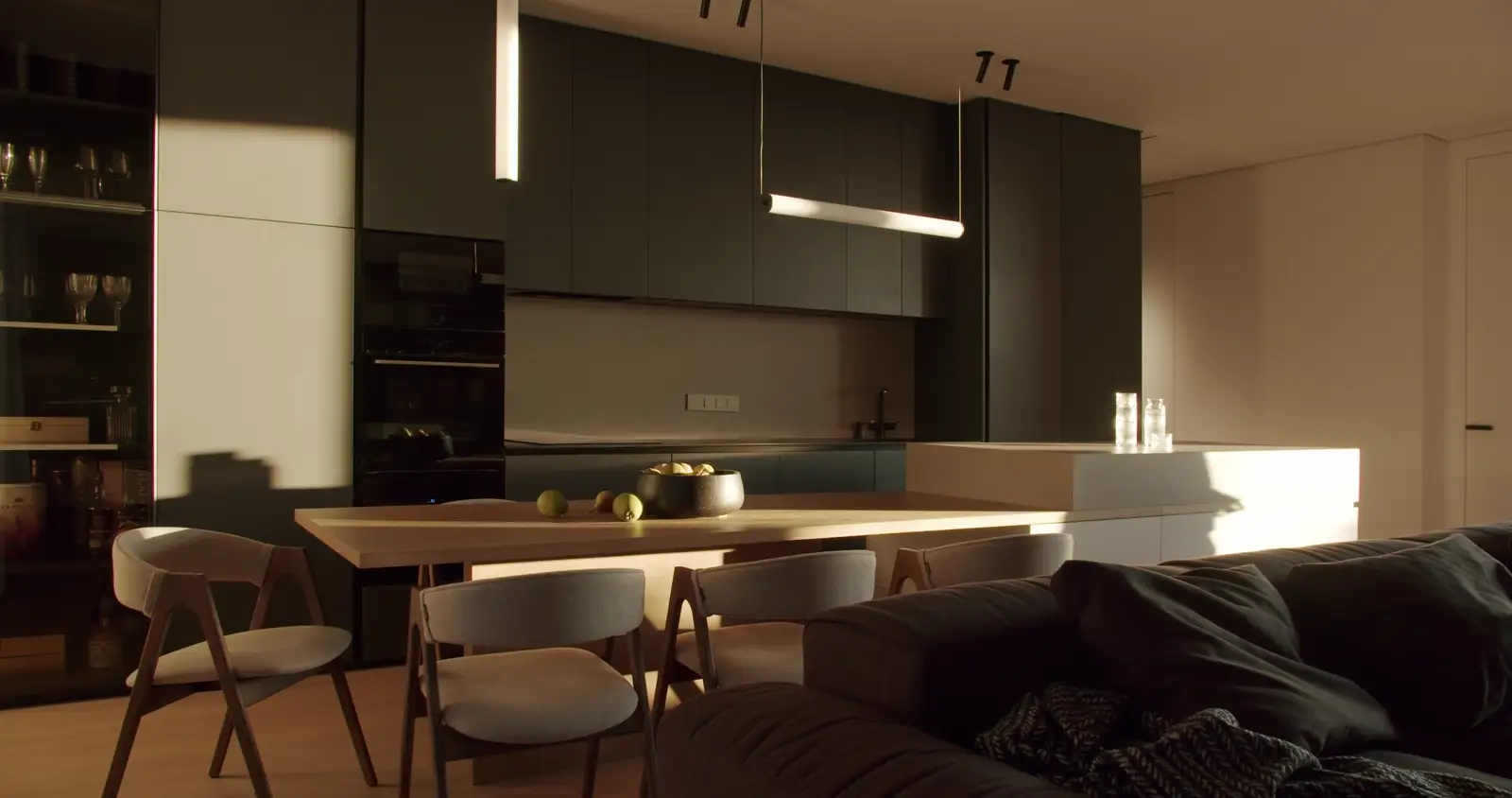
Flat, eggshell, satin, semi gloss or gloss. Where each sheen works, how it affects durability and wall flaws, and how to keep it consistent across your home.
Why choosing paint sheen matters as much as color
Two rooms painted the same color can look completely different if the sheen is different. Choosing paint sheen affects how a wall reflects light, how it holds up to cleaning and how much of the surface underneath you can see.
Sheen is also where the detail of a paint job shows. Crisp, slightly glossier trim against softer walls is what makes a room look finished. That contrast is a big part of our trim, doors and detail work, and it starts with choosing the right finish for each surface.
The sheen scale, from flat to gloss
Sheen describes how much light a dried paint film reflects. From lowest to highest:
- Flat or matte: little to no shine. Soft, even appearance.
- Eggshell: a low, gentle sheen, similar to the surface of an egg.
- Satin: a soft glow with more reflection than eggshell.
- Semi gloss: clearly shiny, smooth and easy to wipe.
- Gloss: high shine, close to a lacquered look.
Names and levels vary between product lines, so one line's satin can look like another's eggshell. Always compare actual samples, not labels.
As a general rule, the higher the sheen, the harder and more washable the surface, and the more it reveals flaws in the wall.
Walls and ceilings: matte, eggshell, satin or flat
Most walls fall in the flat to satin range. The choice depends on the room and the condition of the surface.
Matte and flat
Matte hides patches, seams and slight waves because it does not bounce light. It suits living rooms, bedrooms and dining rooms with low traffic. Many modern matte paints are more washable than older flats, though they still mark more easily than higher sheens.
Eggshell
Eggshell is the most common choice for walls in family homes. It wipes clean reasonably well and still looks soft. It works in hallways, family rooms and kids' rooms.
Satin
Satin adds durability for kitchens, laundry rooms and bathrooms. The tradeoff is that it shows roller marks and wall imperfections more, especially in strong side light.
Central Florida light matters here. Low morning and afternoon sun raking across a wall from a large slider will expose every bump in a satin finish. In bright, open rooms, a lower sheen often looks cleaner.
Ceilings
Ceilings are almost always flat. A flat finish hides the texture and minor imperfections that light from windows and fixtures would otherwise highlight. It also reduces glare from recessed lights and ceiling fans.
The exception is bathrooms with poor ventilation, where a slightly higher sheen or a moisture resistant ceiling product can make sense. Keep ceilings consistent throughout connected spaces so the plane reads as one surface.
How sheen shows wall flaws
Shine works like a mirror. The more a surface reflects, the more clearly you see its shape. Small patches, sanded spots, old nail holes and slight waves that disappear under matte paint can stand out under satin or semi gloss, especially when light hits the wall at a low angle.
Sheen can also flash. If one area of a wall is patched and not primed, it absorbs paint differently and dries with a different level of shine. On a flat finish this is rarely noticeable. On eggshell and above it can show as a dull spot. Proper priming of repairs, and keeping a wet edge while rolling, are what keep a higher sheen even.
If your walls have seen years of repairs, a lower sheen is the forgiving choice. If they are smooth and well prepared, you have more freedom.
Paint sheen for trim and doors
Trim and doors take more contact than walls. Hands, shoes, vacuums and pets all hit baseboards and door edges. That is why semi gloss is the standard for trim and doors in most homes. It is hard, cleans easily and gives a clean line against the wall.
- Semi gloss is the reliable default for baseboards, casings, crown and interior doors.
- Satin on trim gives a quieter, more contemporary look and still wipes clean, though it is slightly less durable.
- Gloss suits a front door or a statement piece, but it shows every brush stroke and dent, so surface prep has to be thorough.
Doors deserve their own thought. A semi gloss door shows fingerprints less than you might expect and wipes clean easily, which matters on pantry, laundry and bedroom doors that see daily use. Match the door sheen to the casing around it so the opening reads as one piece.
Higher sheens make prep more visible. Sanding, filling nail holes and caulking gaps are what keep shiny trim looking sharp instead of lumpy.
Cabinets and vanities need harder finishes
Cabinet doors and bathroom vanities take more abuse than any wall: daily handling, water, cleaners and heat. Standard wall paint, even in a higher sheen, is not built for that.
These surfaces call for harder, purpose made coatings, usually in satin or semi gloss, applied over proper cleaning, sanding and primer. They also need more time to harden before heavy use. Our cabinet refinishing and bathroom vanity refinishing pages explain the process in more detail.
Keeping sheen consistent across a home
Mixed sheens are one of the quieter reasons a house can feel unfinished. In open plan homes, where the living room, kitchen and hallway flow together, inconsistent sheen is easy to spot.
- Pick one wall sheen for connected living spaces.
- Use one trim sheen throughout the house.
- Keep ceilings flat everywhere, except where moisture calls for something else.
- Note the exact products and sheens used so touch ups match later.
Touch ups in a different sheen show as a dull or shiny patch even if the color matches.
Consistency matters outside too. If you are planning exterior painting, the same thinking applies to body color, trim and doors, with finishes chosen for Florida sun and rain.
Putting it together
A simple, reliable pattern for most homes: flat ceilings, matte or eggshell walls, satin in wet rooms, semi gloss trim and doors, and harder coatings on cabinets and vanities.
If you want help choosing finishes for your home, see our trim and doors service or request an estimate.
Frequently asked questions
What is the difference between eggshell and satin?
Satin has more sheen than eggshell, so it is a bit more washable but shows wall imperfections more. Eggshell is a softer, lower sheen that suits most living spaces.
What sheen should trim and doors be?
Semi gloss is the common choice because it is durable and easy to clean. Satin works if you prefer a lower, more modern look.
Why are ceilings painted flat?
Flat paint hides texture and minor flaws and reduces glare from windows and lights, which makes the ceiling read as a smooth, even surface.
Can I use wall paint on cabinets?
It is not recommended. Cabinets and vanities need harder coatings designed for frequent handling and moisture, applied over proper prep and primer.
Free estimate
Talk to CORE about your project.
Open 24/7. Save 10% on any job over $2,500.