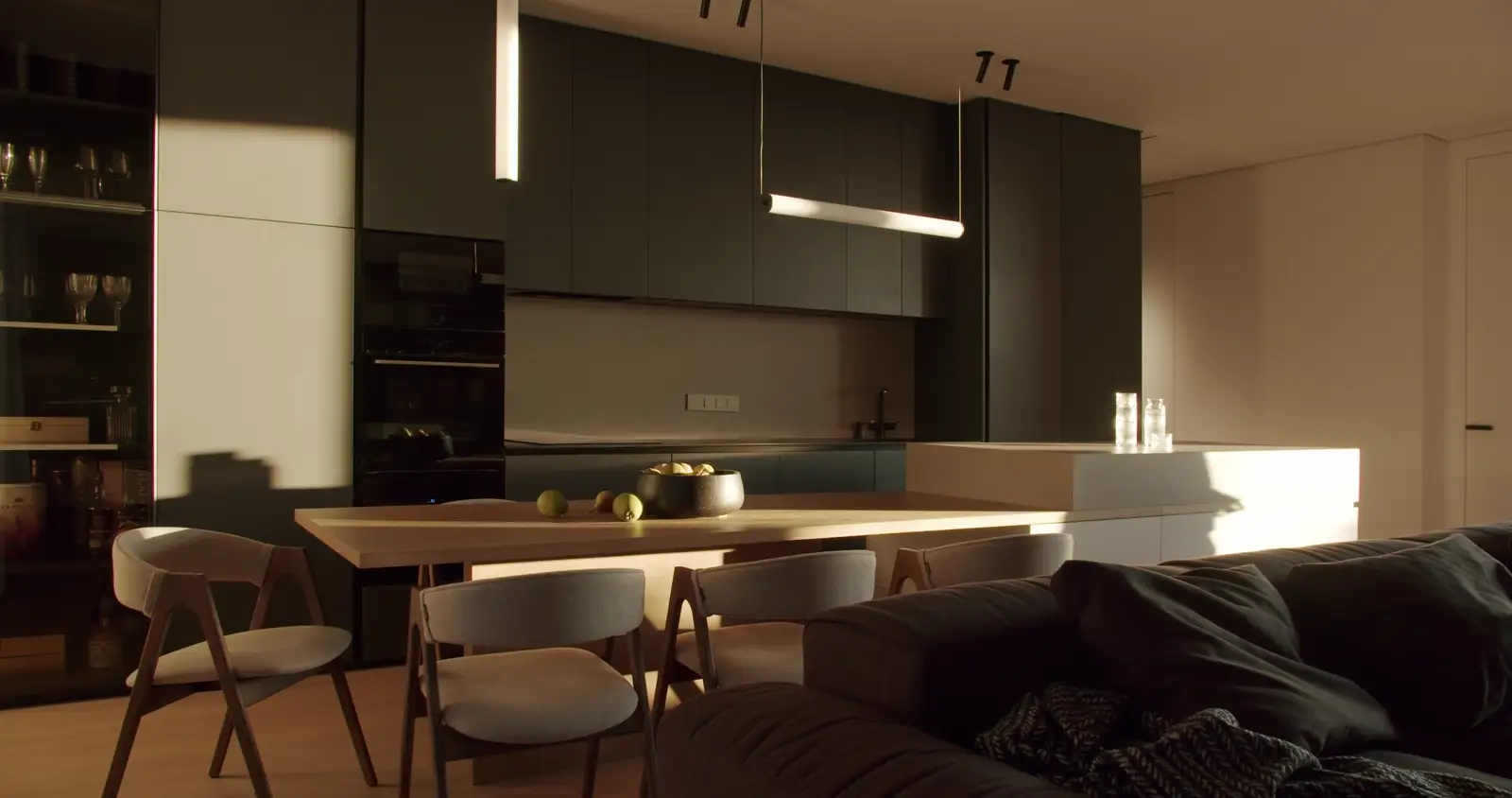
Which wall, which color and which sheen. A practical guide to choosing an accent wall that holds up in bright, open Orlando homes long after the first impression.
How to choose an accent wall: start with the room, not the color
Most people start with a color they love and then look for a wall to put it on. That is how an accent wall ends up feeling dated two years later. If you want to know how to choose an accent wall that keeps working, start with the room: where people sit, where the eye goes when you walk in, and how light moves across the space during the day.
An accent wall is a single decision, but it changes how the whole room reads. Done well, it gives a space a clear anchor. Done casually, it looks like a wall someone forgot to finish. Our accent wall painting work starts with these same questions before any color is discussed.
This guide walks through the choices in the order we would make them, with notes for the open floor plans and strong natural light common in Orlando, Winter Park, Lake Mary and Windermere homes.
Pick the wall the eye already lands on
The right accent wall is usually already obvious. It is the wall that holds the focal point of the room, or the one you see first when you enter. Good candidates include:
- The wall behind a bed headboard
- The wall behind a sofa or a media console
- A wall with a fireplace or built in shelving
- The end wall of a dining area that you see from the kitchen
- A short wall that closes off a hallway view
Avoid walls broken up by several doors, windows or openings. Color on a chopped up wall reads as fragments, not a feature. Also avoid the wall you only notice when you are standing against it. If no one looks at it, it cannot anchor the room.
In open plan homes, think about sightlines. An accent wall in the living area is often visible from the kitchen and entry too, so it needs to sit comfortably with everything around it, not just the sofa in front of it.
Read the light before you pick an accent wall color
Light direction changes a color more than most people expect. Central Florida sun is strong for much of the year, and many homes have large sliders and windows that flood rooms with light by midmorning.
- Walls facing the windows get direct light. Deep colors look richer and true to the chip here.
- Window walls sit in shadow from inside the room, because you see them against bright glass. Dark colors on a window wall can look almost black and heavy.
- West facing rooms turn warm and golden in the late afternoon, which pushes cool colors toward gray and warm colors toward orange.
- North and east facing rooms stay cooler and more even, which suits greens and blues.
As a rule, an accent wall that receives light looks deliberate. One that sits in its own shadow can look like a dark hole in the room.
Color depth: navy, deep green, charcoal and warm neutrals
The accent colors that hold up over time tend to be deep, slightly muted and close to colors found in nature or in good fabric. Bright, saturated colors make a statement on day one and feel tired by year three.
Navy
A muted navy reads as classic and works with white trim, wood tones and brass. In bright rooms it stays clearly blue. In dim rooms it can read close to black, so sample it.
Deep green
Olive, forest and green gray tones sit well against Florida greenery seen through the windows. They feel calm and pair well with natural wood and linen.
Charcoal
Charcoal gives contrast without color. Choose one with a slight warm or cool lean that matches the rest of the house, rather than a flat neutral gray.
Warm neutrals
Not every accent wall needs to be dark. A deeper greige, clay or mushroom tone two or three steps darker than the surrounding walls gives a quieter shift that suits many open plan homes.
Whatever the hue, look at the undertone next to your flooring, cabinets and furniture. An accent wall should agree with what is already in the room.
Sheen, trim and ceiling
Deep colors show sheen more than light ones. A matte or flat finish makes a dark wall look velvety and hides small surface flaws. Eggshell is a reasonable middle ground in family rooms where the wall may get touched. Higher sheens on a dark accent wall tend to show every roller mark and glare under strong light. Sheen on the surrounding trim and doors should be chosen alongside it.
Decide where the color stops. Usually the accent color runs corner to corner and stops cleanly at the ceiling line. Trim can stay the same white as the rest of the house for a crisp frame, or be painted to match the accent color for a more tailored, modern look. Keep the ceiling the same as the rest of the room unless you are deliberately wrapping the color overhead.
Accent wall mistakes to avoid
- Choosing from a tiny chip. Small samples look lighter and brighter than a full wall.
- Picking the wrong wall. A wall nobody faces, or one full of openings, will never read as a feature.
- Too many accents. One accent wall per open area is usually enough. Several compete with each other.
- Ignoring adjacent rooms. In open layouts, the accent must work with the kitchen, dining and hallway colors you can see from it.
- Uneven edges. A deep color makes a wavy ceiling line or a messy corner very visible. Clean lines are what make an accent wall look intentional.
Sample in your own light
Before committing, paint large samples, at least the size of a poster, directly on the wall or on sample boards. Place them in two or three spots on the wall you are considering. Then look at them in the morning, midafternoon and at night with your lamps on.
Pay attention to how the color looks from where you actually sit and from the next room over. If it still looks right at every time of day, it will likely still look right in a few years. If you have questions about the process, our FAQs cover how we handle color selection and scheduling.
Bringing it together
A lasting accent wall comes from the right wall, a color tested in your own light, a sensible sheen and clean edges. Get those four right and the wall will keep feeling deliberate long after the novelty fades.
If you would like help choosing and painting one, see our accent wall service or request an estimate. We work in Orlando, Winter Park, Lake Mary, Windermere and nearby communities.
Frequently asked questions
Which wall should be the accent wall?
Usually the wall that holds the room's focal point, such as the wall behind a bed, sofa or fireplace, or the first wall you see when you walk in. Avoid walls with several doors or windows.
Do dark accent walls make a room look smaller?
Not necessarily. A deep color on a well lit wall often adds depth. Dark colors on a window wall or in a dim room are more likely to feel heavy, so sample first.
What sheen should an accent wall be?
Matte or flat finishes make deep colors look rich and hide minor surface flaws. Eggshell is a practical choice where the wall will be touched more often.
Should trim match the accent wall color?
It can. Keeping trim white gives a crisp frame, while painting trim the same color as the wall gives a more tailored look. Either works if it is consistent with the rest of the home.
Free estimate
Talk to CORE about your project.
Open 24/7. Save 10% on any job over $2,500.